Dog walking is not just a daylight affair. In this article, we delve into the unique challenges and rewards of dog walking at night. Discover essential safety tips, the health benefits for you and your pet, and how to make the most of every nocturnal outing.
Preparation and Safety for Night-time Walks
Embracing the night offers a unique opportunity to enrich the daily routine of pet care, adding a touch of adventure to the traditional dog walking experience. But it’s essential to keep safety at the forefront. One of the key facets to ensuring a safe and enjoyable nocturnal adventure is proper preparation. It all begins with the right gear.
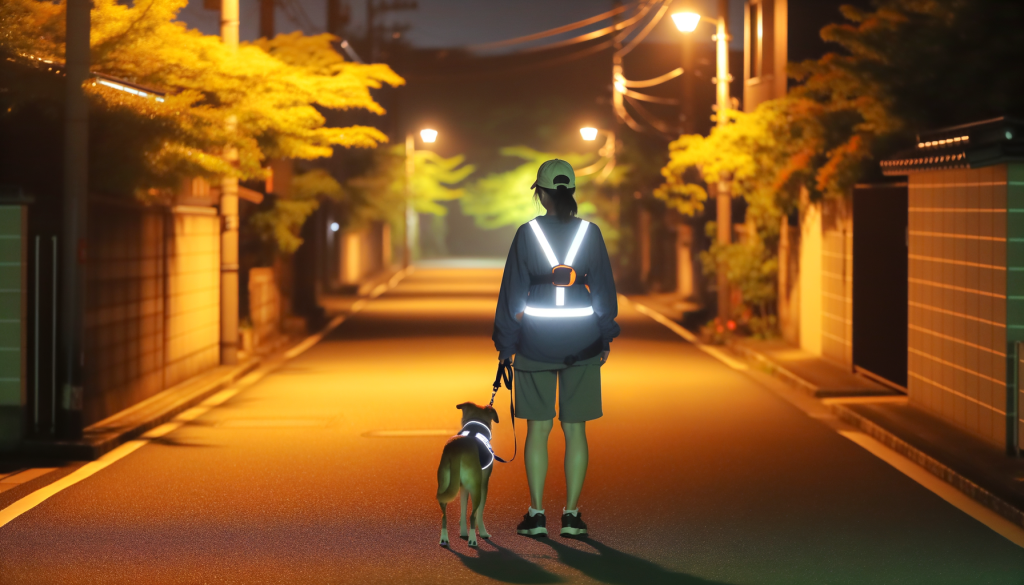
Reflective harnesses, collars, and leashes are your best friends when it comes to walking your canine companion after dusk. These safety accessories are crucial in making both you and your pet more visible to drivers, cyclists, and other pedestrians. The decrease in visibility during nights needs to be combated, and these reflective products serve to create a safer environment.
Studying the route beforehand is another vital aspect of preparation. Knowing the area is beneficial in identifying any potential hazards and keeping an eye out for them to keep you and your pet safe. The path should be well-lit enough, preferably with street lamps evenly spaced, minimal traffic, and a sidewalk or trail, where your dog can walk without facing immediate risks.
Understanding your dog’s behavior in darkness is another critical area. Dogs can act differently in low light; some may become more anxious, while others may get overly excited. Being aware of your dog’s potential reactions will help you manage the situation better.
When it comes to hazards like nocturnal wildlife, take the time to study the local fauna and their behavior. Skunks, raccoons, or foxes are more active at night, and some dogs might react strongly to their presence.
Lastly, for a comfortable walk, the dog owner’s ensemble plays a decisive role. Depending on the season and weather, your clothing should be suitable for the conditions. In colder months, gloves, hats, and warm jackets are a must. In terms of footwear, choose sturdy shoes that can provide a solid grip and handle a variety of terrains.
Adapting to night-time walking is not an overnight process. It requires patience, preparations, and keen observance to make the night-time walk an enjoyable experience for both dogs and their owners. Remember, the key to a successful nocturnal adventure lies in understanding your pet, the environment, and how to ensure safety for both parties.
Persevere with these strategies, and you’ll soon unlock a new arena of health benefits and strengthen the bond with your canine companion, all while enjoying the tranquility of the night. This unique exercise routine might even inspire your neighbors, fostering an increased sense of community. Embrace the night, and let the adventure begin!
Maximizing Health Benefits and Strengthening Bonds
Having safely navigated the dark with your faithful canine, walking at night not only serves as an exciting adventure but also as a health-boosting exercise whcih enhances the bond between man and beast. Embarking on these nightly excursions aligns smoothly with the recommended dose of 150 minutes of weekly exercise for both humans and dogs. While traversing across quiet neighborhoods and deserted parks after sundown can lead to a healthier heart, increase muscle strength and promote weight control, it also conditions your dog, helping prevent obesity and other health issues associated with inactivity.
Indeed, the serenity of night times allows for more intense, uninterrupted workout sessions in comparison to busy daytime streets. Your dog can enjoy long, free runs without the stress induced by incessant traffic and a myriad of distractions.
Additionally, the yielding aura of the evening skies enhances mental health. The calming effect of quieter environments serves as a balm, melting away the stress accrued during the day for both you and your dog. Additionally, the inherent simplicity of concentrating on the path ahead with your trusted companion fosters mindfulness and a stronger sense of META (Most Effective Tactic Available) cognitive presence, working wonders in relieving tension.
Furthermore, these tranquil walks accentuate the bond between you and your dog while fostering a greater sense of community. The shared experience of exploring together under the protective blanket of night nurtures an incomparable bond. The confidence you exude while charting your path in the dark imprints on your canine, reaffirming your position as the pack leader.
Meanwhile, the heightened sense of security fostered within neighborhoods that support night-time dog walking enhances unity amongst residents, and it empowers you to build relationships within the community. Tiny acts such as exchanging salutations with a fellow night-walker, or collectively ensuring well-lit and safe pedestrian paths, embrace the essence of a connected society.
In conclusion, strolling through the darkness with your furry friend is more than just a post-dinner necessity. It offers numerous benefits, promising a healthier life, enriching bonds, and a more secure neighborhood. Embrace the peace of the night with your canine, it’s an adventure that adds value to the lives of both parties involved.
Conclusions
Walking your dog at night is much more than a routine task; it’s an opportunity to enhance health, safety, and community bonds. By following the key guidelines and embracing night-time adventures with your pet, you open up a world of shared experiences that benefit both you and your dog.